






 Mixing consignments or schemes One declaration is one consignment, with up to 999 items. It does not mix IOSS and non-IOSS items, special-arrangement and other items, or F53 with other types.
Customs · Low-value consignments H7 declaration:
H7 declaration:
parcels up to €150
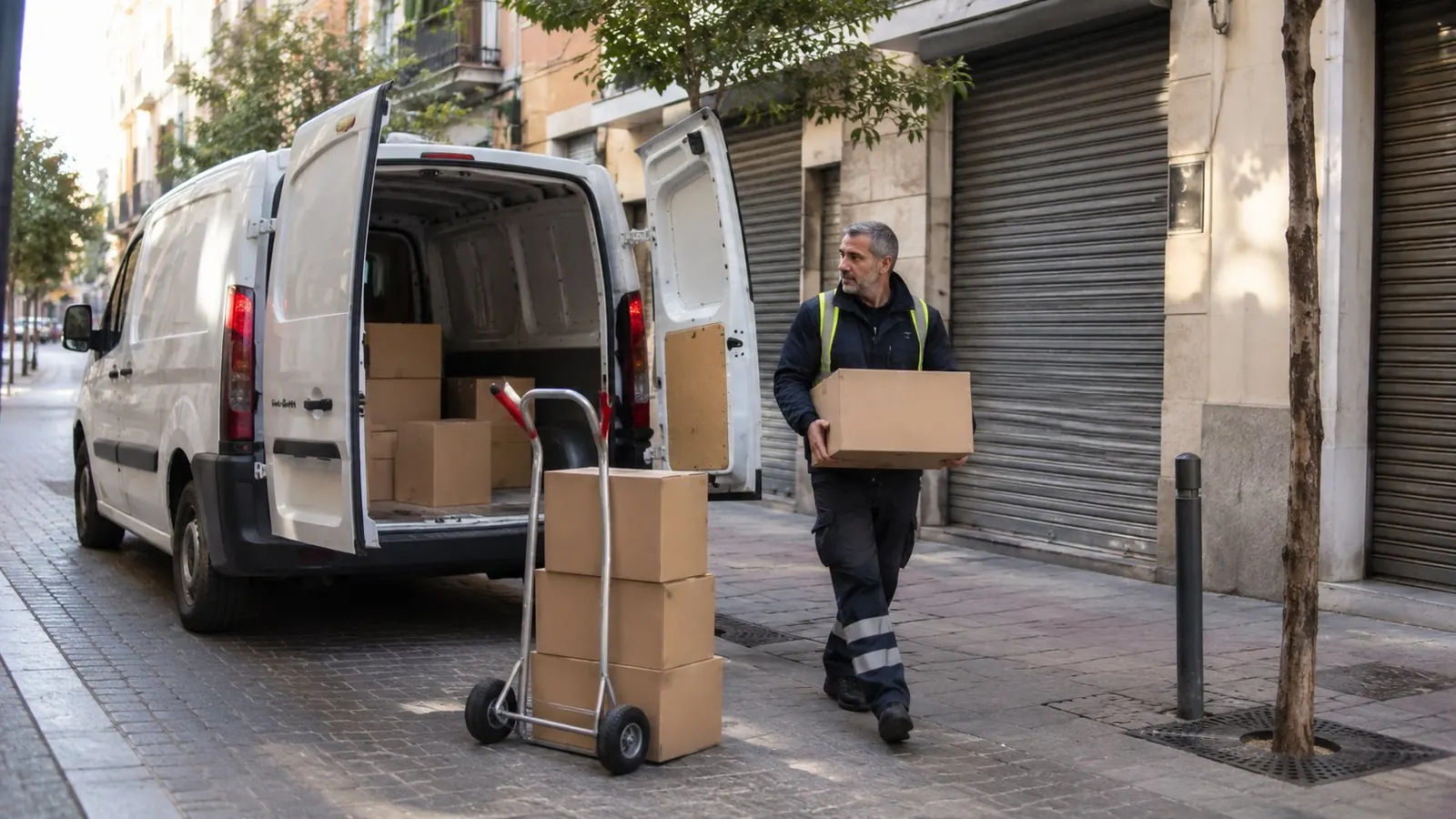
The H7 is the import declaration for low-value consignments, up to €150 per consignment: online purchases, gifts between private individuals, documents and samples. There is one per consignment, and the courier or the freight forwarder files it as representative. Since 1 July 2026 there is no exemption: each item pays €3 of customs duty.









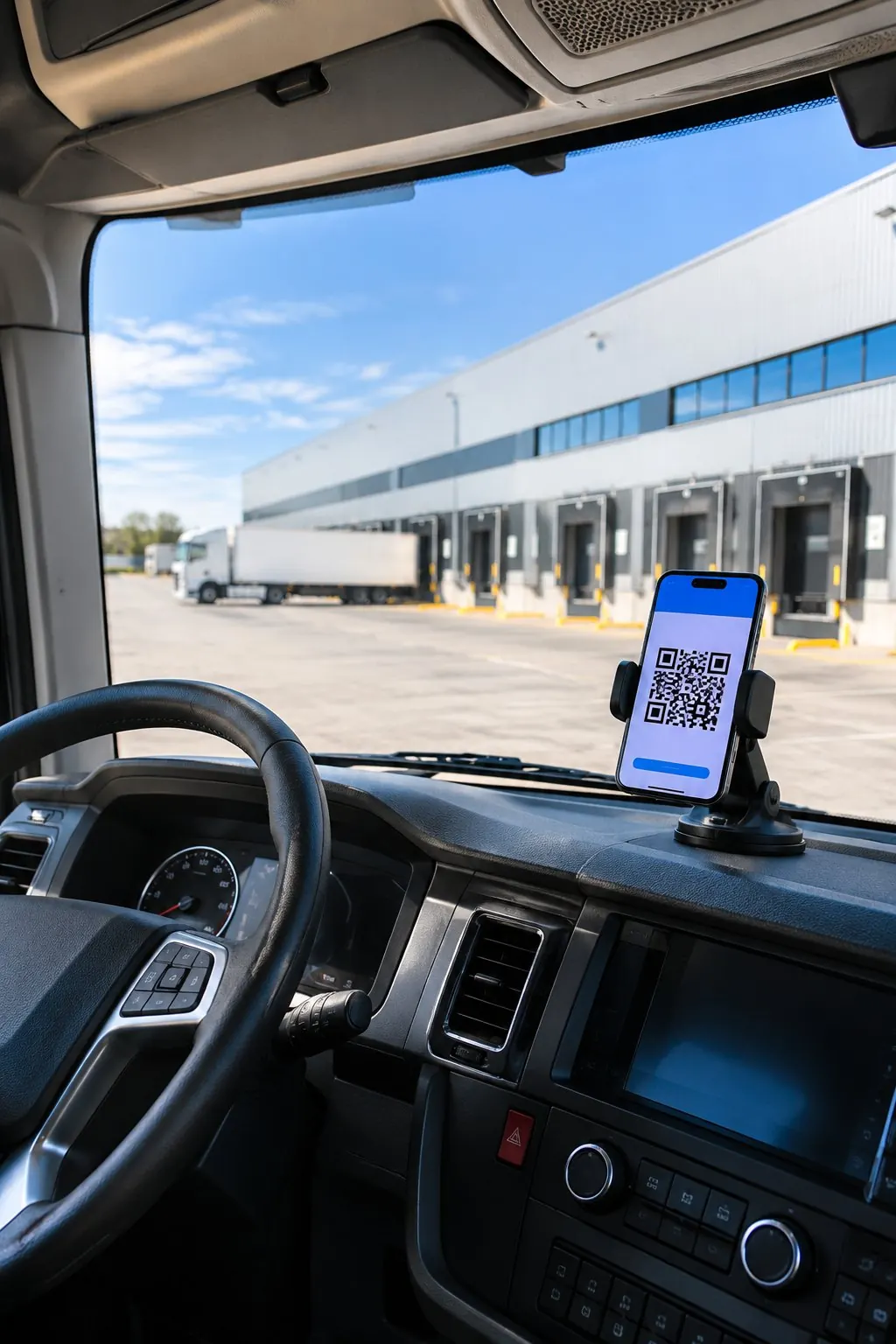

Up to €150 in value. One declaration per consignment.
From 1 July, €3 of customs duty per item.
From 1 November, a further €2 handling fee.
What is the H7 and when
can it be used?
Each H7 carries an additional code that states the type of consignment. The code sets the value limit and what is assessed.
| Type | Used for | Value limit | What is assessed |
|---|---|---|---|
| F48 · IOSS | Distance sale with the IOSS number of the seller or the platform | Up to €150 | Duty and fee. The import is VAT-exempt: VAT goes in the IOSS return |
| F49 · Special arrangements | Distance sale without IOSS; the courier or postal operator collects VAT from the recipient | Up to €150 | Duty, fee and VAT, paid with a monthly payment letter |
| F53 · Standard VAT | Distance sale outside IOSS and the special arrangements | Up to €150 | Duty, fee and VAT |
| C08 · Between private individuals | Gift sent free of charge from one private individual to another | Up to €45 (in the Canary Islands, up to €110 depending on the sender's country) | Nothing |
| C35 and C36 · Documents | Documents with no commercial value | €0 | Nothing |
| C16 · Therapeutic substances | Therapeutic substances of human origin | €0 | Nothing |
| C30 · Samples | Samples for trade promotion | Post-clearance control | Nothing |
| F15 · Supplement | Added in trade with special fiscal territories | — | No duty and no fee |
General information; not advice.
When not When can the H7
When can the H7
not be used?
Four cases in which the AEAT rejects the H7 or a different declaration is needed.
The consignment is worth more than €150 The limit is the intrinsic value of the consignment. Above it, the import goes in an import declaration (DUA, H1). Import declaration → Prohibitions and restrictions Goods subject to prohibitions or restrictions, such as those needing a certificate from another agency, are not declared in an H7: the AEAT rejects them. Controls by other agencies → AIEM in the Canary Islands Goods subject to the Canary Islands tax on imports and supplies of goods (AIEM, arbitrio sobre importaciones y entregas de mercancías) do not fit in an H7 either. Customs in the Canary Islands → Mixing consignments or schemes One declaration is one consignment, with up to 999 items. It does not mix IOSS and non-IOSS items, special-arrangement and other items, or F53 with other types. What happened to the €150 duty exemption?
It no longer exists. Since 1 July 2026 each item pays €3 of customs duty, and since 1 November, €2 of handling fee. VAT has been due since 2021. These are the dates.
1 July 2021 VAT
Every consignment of up to €150 pays VAT.
With IOSS, VAT is included in the price and the seller declares it. Without IOSS, the carrier can collect it before delivering the parcel.
1 July 2026 Duty · A00
End of the exemption: €3 per item.
Council Regulation (EU) 2026/382 removed the customs duty exemption for consignments of up to €150. Instead, each item pays a fixed duty of €3, with or without IOSS. It is temporary: until 1 July 2028.
16 October 2026 H7 guide v3.23
The fee enters the VAT base.
The AEAT corrected what it said on 1 October: the handling fee (F00) is part of the VAT taxable base (B00), like the duty. H7 guide v3.23 reflects this.
1 November 2026 Fee · F00
€2 handling fee per item.
Customs charges a fixed fee on distance sales, also above €150. It is not temporary and is not refunded once the declaration is accepted. From that day the AEAT also requires product identifiers on each item.
How much is paid
per parcel?
A consignment with one €40 item, €5 of transport and the standard VAT rate of 21%. With IOSS (F48) there is no VAT at customs, and only duty and fee are paid: €5.
| Item | How it is calculated | Example |
|---|---|---|
| Intrinsic value | From the purchase invoice | €40.00 |
| Transport and insurance to destination | Always declared, even if 0, and added to the base | €5.00 |
| Customs duty (A00) | €3 per item | €3.00 |
| Handling fee (F00) | €2 per item, from 1 November 2026 | €2.00 |
| VAT base (B00) | Value + transport + duty + fee | €50.00 |
| VAT | Base × rate, in F49 and F53 | €10.50 |
| At customs | Duty + fee + VAT | €15.50 |
Illustrative example. The VAT rate depends on the goods, and the assessment returned by the AEAT prevails. At 21%, the fee adds €0.42 of VAT per item.
What is IOSS
and who can use it?
IOSS (Import One-Stop Shop) is the special VAT scheme for distance sales of imported goods of up to €150. The seller or the platform charges VAT at the time of sale and declares it every month. In the H7 (type F48) its number, starting with IM, is declared, and the import is VAT-exempt. If the seller charges the customer the duty or the fee, those amounts go in its IOSS return.
To declare an IOSS number, the declarant needs the authorisation of the platform that holds it. The AEAT accepts a general authorisation, filed through its registry with the Subdirección General de Gestión Aduanera (D57963) or the Oficina Nacional de Gestión Aduanera e IIEE (D28976), or a one-off authorisation, with code 1014 in the declaration. With direct representation, the declarant is the IOSS holder; with indirect, the carrier.
Import VAT Clearance How is an H7 consignment cleared?
How is an H7 consignment cleared?
From arrival to delivery, in five moments.
- Before arrival
ENS and PreH7
The carrier files the entry summary declaration in ICS2. If the goods have not arrived, the H7 is lodged as a PreH7 and the AEAT says whether it will ask for documents.
ICS2 and the ENS - On arrival
Presentation with the G3
The goods are presented to customs with the G3 (presentation notification) or placed in temporary storage (G4). The G3 activates the waiting PreH7s.
Temporary storage - On filing
MRN and channel
The AEAT accepts the H7, gives it its MRN and assigns it a channel: no control, under control or waiting on the ENS, which means querying again. If it asks for documents, the invoice and proof of payment are attached.
- Before delivery
Query by G3
A query with the G3 MRN returns the status of all its H7s, up to 999 per response. The parcel is only delivered with release (LE) or with a payment letter (CA or CP).
- Afterwards
Payment letters
Duty and fee, and the VAT under F53, go in a payment letter after 4 days, per day of import. VAT under the special arrangements (F49), on the 1st of the second month.
Scroll
What if the parcel
is returned?
It leaves the Union again01
If a released IOSS or special-arrangement consignment leaves with an exit declaration (EXS or ETD) under the same consignment number, this is notified with the H7 re-export service. It accepts up to 9,999 MRNs per message.
It leaves under transit02
If the return travels under a transit that cites the H7 as previous document, it is also notified, in the statuses the guide allows: released, not released, returned, pending H1 or with a payment letter.
Notified by mistake03
Each of the two re-exports has its own cancellation.
What can be recovered04
VAT follows its usual rules. The €3 duty is not refunded even if the consignment comes back, unless the goods are defective or do not match the contract. The handling fee is never refunded once the declaration is accepted.
Frequently asked questions
about the H7
All about customs → What is the H7 declaration and when can it be used?
It is the import declaration for low-value consignments: up to €150 of intrinsic value per consignment, for online purchases, gifts between private individuals, documents and samples. There is one declaration per consignment, with up to 999 items. It cannot be used for goods subject to prohibitions or restrictions or, in the Canary Islands, for goods subject to the AIEM.
Is VAT paid on a parcel worth less than €150?
Yes, since 1 July 2021. If the seller uses IOSS, VAT is included in the price and the import is exempt. If not, it is paid on import and the carrier can collect it before delivering the parcel; the base includes transport, duty and the handling fee.
What is IOSS?
The Import One-Stop Shop: a special VAT scheme for distance sales of imported goods of up to €150. The seller or the platform charges VAT at the time of sale and declares it every month; its number (starting with IM) is declared in the H7 and the import is VAT-exempt. Whoever files the H7 must be authorised by the platform to use that number.
What happened to the €150 duty exemption?
It no longer exists. Regulation (EU) 2026/382 removed it from 1 July 2026 and replaced it with a fixed duty of €3 per item, with or without IOSS. It is temporary and applies until 1 July 2028.
What is the F00 fee and how much is it?
It is the Union handling fee: €2 per item on distance sales, from 1 November 2026 and whatever the value of the consignment. It is part of the VAT base and is not refunded once the declaration is accepted. In the H7 it is assessed under code F00, together with the duty (A00).
What is a PreH7?
An H7 filed before the goods arrive. It stays pending until the goods are presented with the G3, which activates it, and the AEAT says whether it will ask for documents. A PreH7 can be cancelled by its MRN; an H7 already accepted cannot.
Who files the H7?
Usually the courier, the postal operator or the freight forwarder, as direct or indirect representative. Filing it requires the H7 clearance authorisation (code 1018) and a comprehensive guarantee; if an IOSS number is declared, also its holder's authorisation to use it. A seller based outside the EU normally works through one of them.
Is anything recovered if the parcel is returned?
VAT follows its usual refund rules. The €3 duty is not refunded even if the consignment comes back, unless the goods are defective or do not match the contract, and the handling fee is never refunded. The return of IOSS or special-arrangement consignments is notified with the H7 re-export service.