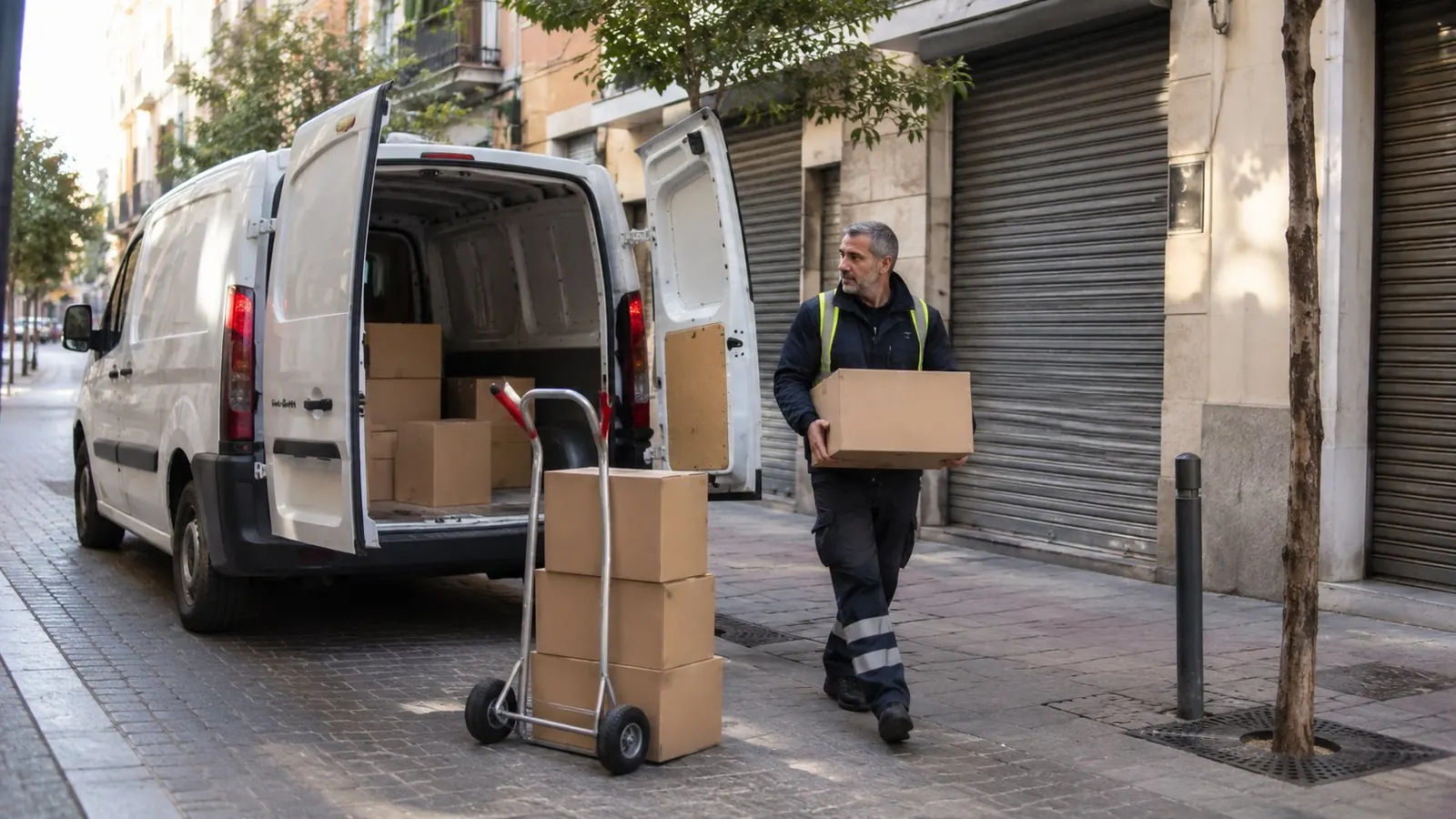






ATP refrigerated transport. From the thermograph CSV to what it says.
Each perishable product has a maximum temperature in the ATP, and quick-frozen foods travel with a thermograph whose record is kept for a year. Paste or upload the CSV the device exports and Cofactu tells you when it went out of range, for how long, whether it was a tolerated defrost and where readings are missing. Free, with no sign-up and without uploading the file.


Before · what the thermograph exports
Transport temperature report
After · what it says
—
Indicative report made with Cofactu's free analyser (cofactu.com/en/logistics/refrigerated-transport-atp) from the thermograph file, without verifying its origin. ATP temperatures, BOE-A-2026-20469, annexes 2 and 3. The probe measures the air, not the product.
Maximum temperature of the goods, under the ATP.


| Goods | Maximum | Basis |
|---|---|---|
| Ice cream | -20 °C | Annex 2 |
| Quick-frozen foods, and frozen fish, molluscs and crustaceansThe unit carries a device that records the air temperature (EN 12830:2018). | -18 °C | Annex 2 |
| Other frozen foods (except butter) | -12 °C | Annex 2 |
| Frozen butter | -10 °C | Annex 2 |
| Raw milkCollected at the farm for immediate processing: up to +10 °C during transport. | +6 °C | Annex 3, I |
| Red meat and large game (excluding offal) | +7 °C | Annex 3, II |
| Meat products, pasteurised milk, fresh dairy, ready meals, prepared vegetables, concentrated juices and fish productsOr the temperature shown on the label or in the transport documents. | +6 °C | Annex 3, III |
| Small game, poultry and rabbits | +4 °C | Annex 3, IV |
| Red offal | +3 °C | Annex 3, V |
| Minced meatOr the temperature shown on the label or in the transport documents. | +2 °C | Annex 3, VI |
| Untreated fish, molluscs and crustaceansThe ATP says “in melting ice or at melting-ice temperature”: +2 °C is a practical reference, not a value of the agreement. | +2 °C | Annex 3, VII |
At any point of the load, when loading, during transport and when unloading. Chilled goods must not freeze at any point (annex 3, point 4).
What does the mark on the body mean?

The record of every trip, next to the service.
In Cofactu Logistics the same analyser is under Resources → Temperatures, and with the cold module each service stores its range, the driver's readings, the thermograph imports and the annex to the proof of delivery. The DeCA and the consignment note are issued for free.
Cofactu Logistics · Free DeCA · Consignment note · Tachograph analyser
Cold chain and ATP, no small print.
What people ask before loading a refrigerated truck.
What is the ATP?
The Agreement on the International Carriage of Perishable Foodstuffs and on the Special Equipment to be used for such Carriage: it sets which units (insulated, refrigerated, mechanically refrigerated, heated, mechanically refrigerated and heated) may carry perishable food and at what maximum temperature each product must travel. Its latest consolidated text was published in Spain's BOE on 2 October 2026.
At what temperature are quick-frozen foods transported?
At -18 °C at most at any point of the load (annex 2). Ice cream at -20 °C; other frozen foods at -12 °C, and frozen butter at -10 °C. During operations such as defrosting a brief rise of up to 3 °C in part of the load is tolerated.
Can I produce a temperature report for my client?
Yes. Upload the thermograph CSV, choose the goods, enter the trip reference and the plate and press “Print report”: you get a sheet with the period, the minimum and the maximum, the chart, when and by how much it went out of range and the gaps with no readings. You save it as a PDF from the print dialog, free and with no sign-up.
Is a thermograph mandatory?
For quick-frozen food intended for human consumption, yes: the unit carries a device that measures, records and stores the air temperature, in line with standard EN 12830:2018. The readings of each transport are dated and kept for at least one year (annex 2, appendix 1).
What changes with the 2026 ATP?
Keeping the readings for one year, standard EN 12830:2018 and verifying the device with at least two measuring points under EN 13486:2023 must be applied within a maximum of twelve months from 25 August 2026. Recorders compliant with EN 12830:1999 already in service may continue to be used.
What does FRC on the body mean?
Mechanically refrigerated (F), heavy insulation (R, K coefficient of 0.40 W/m²·°C at most) and class C (interior temperature adjustable between +12 °C and -20 °C). Under the mark goes the month and year the certificate expires. Two compartments are marked “FRC-FRA”; several, with the highest class and “-M”.
Does Cofactu keep the record?
The analyser on this page and the one in the app read the file in the browser and do not upload it. In Cofactu Logistics the cold file of each service stores the readings, the thermograph imports and the annex to the proof of delivery.