Customs · Special procedures

Special customs
procedures

Special procedures (regímenes especiales) let you bring goods into the EU without paying import duty or VAT yet, or paying less: to use them and re-export them (temporary admission, 53), to process them (inward processing, 51) or to put them to a specific use at a reduced duty rate (end-use, 44). They need an authorisation, a guarantee and a time limit, and they close when they are discharged.

The procedures

Which special
procedures exist?
And what each one is for.

  • Temporary admission (53)
    use and re-export

  • 24 monthsmaximum for temporary
    admission, unless another period applies

  • Inward processing (51)
    process without duty

  • End-use (44)
    reduced duty for a specific use

  • Returned goods (61): three years to come back duty-free

  • Outward processing
    process outside the EU

  • ATA carnet
    fairs, samples and equipment

  • 30 daysfor the bill of discharge
    in IP and end-use

Comparison

How do the special
procedures differ?

What each one allows, what you do not pay, which authorisation it needs, how long it lasts and whether it requires a guarantee and a bill of discharge.

Special customs procedures. Source: Union Customs Code (Regulation 952/2013), Delegated Regulation 2015/2446 and AEAT code tables.
ProcedureWhat it is forWhat is not paidAuthorisationPeriodGuarantee and discharge
Temporary admission (53)Use non-EU goods in the EU that will be re-exported unchanged.Import duty and other charges, with total relief; with partial relief, 3 % of the duty per month.C516. With the declaration itself, an ATA carnet or DC45.Set by customs: 24 months maximum unless another rule applies, 10 years in total.Guarantee: yes. Bill of discharge: no.
Inward processing (51)Process, repair or assemble non-EU goods and re-export the result.Import duty, other charges and commercial policy measures that do not ban entry.C601. With the declaration, within limits, or DC43.Set by the authorisation; there is no default period.Guarantee: yes. Bill of discharge: 30 days.
End-use (44)Release for free circulation goods that are put to a specific use.All or part of the duty: released with relief or at a reduced rate.N990. With the declaration if all the goods go to that use.Set by the authorisation.Guarantee: yes. Bill of discharge: 30 days.
Outward processingTake EU goods out of the EU to process or repair them and re-import them.All or part of the duty on the goods that come back; all of it if the repair was free of charge.DC44, or with the declaration.Set by customs for re-import.—
Returned goods (61)Re-import goods that left the EU as Union goods.Import duty, on request (code F01). VAT is handled separately.Not needed.Three years from export.Guarantee: no. Bill of discharge: no.

General information; not advice.

Temporary admission (53)

What is temporary admission
and how long does it last?

What it is for01

To use non-EU goods in the EU that will leave again: pallets and containers, means of transport, samples, professional equipment, items for trade fairs. The goods must leave as they came in, apart from normal wear from use, and must be identifiable. As a rule, the holder is established outside the EU.

How long it lasts02

Customs sets the period, with enough time for the authorised purpose. For the same purpose and holder, the maximum is 24 months unless the law says otherwise. An extension is possible in exceptional circumstances, but the total cannot exceed 10 years except in unforeseeable circumstances.

Total or partial relief03

Relief is total in the cases listed in the Delegated Regulation (pallets, containers, samples, exhibitions, professional equipment…). Otherwise it can be partial: you pay 3 % of the import duty that would apply for each month or part of a month, never more than if the goods had been released for free circulation.

The Dxx code04

Since 30 September 2026, the AEAT (Spanish Tax Agency) requires a Dxx code (D01 to D29, or D51) in box 11 10 of the H1 import declaration with procedure 53. It states what the goods are: D01 pallets, D02 containers, D21 samples… It is not declared if code F15 is used.

How it is discharged05

By re-exporting (AES 3153), releasing for free circulation (H1 4053) and paying what is due, moving to another special procedure, destroying the goods with no waste, or abandoning them to the State. The later declaration carries “TA” and the authorisation number.

Periods

How long can
temporary admission last?

Some cases have their own discharge period, counted from when the goods are placed under the procedure. In all others, the authorisation applies.

Discharge periods for temporary admission. Source: Delegated Regulation (EU) 2015/2446, arts. 217, 218 and 237, and art. 251 of the UCC.
GoodsPeriod
Rail means of transport12 months
Means of transport for commercial use (not rail)The time needed for the transport operation
Road, private use6 months; students and people on assignment: the length of their stay
Air, private use6 months
Sea and inland waterway, private use18 months
Containers, their equipment and accessories12 months
Means of transport returned to an EU rental company6 months from entry; if rented out again, plus 3 weeks from the new contract
Non-profit testing, replacement means of production and goods delivered for a buyer to examine6 months
AnimalsAt least 12 months
Other goodsThe period in the authorisation, up to 24 months

General information; not advice.

ATA carnet

What is the
ATA carnet for?

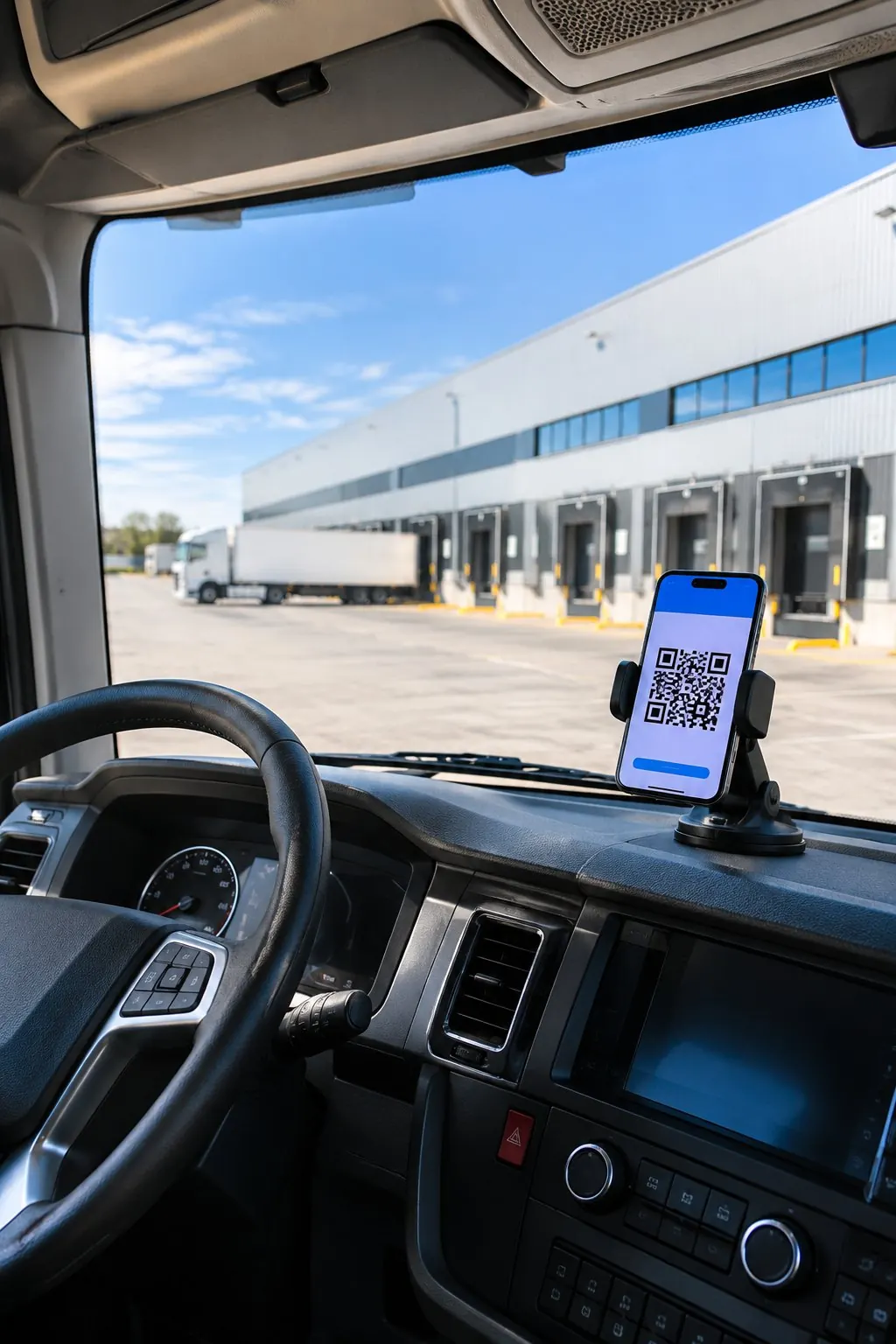
The ATA carnet (cuaderno ATA) is an international customs document that replaces the temporary admission declaration in the countries of the ATA system: commercial samples, trade fairs and exhibitions and professional equipment. You do not pay duties or lodge a guarantee in each country, because the issuing Chamber of Commerce guarantees it. It cannot be used for goods that will be processed or repaired, or for perishables or goods subject to excise duty. Carnets issued since 31 March 2026 also come in digital format, with a QR code per operation.

AEAT guide to the ATA carnet (Spanish)
Process, use, return

Processing,
end-use
and returned goods

What is inward processing?

It lets you process, repair or assemble non-EU goods in the EU without paying import duty or other charges while the procedure lasts. The processed product is re-exported or, if it stays, released for free circulation. The authorisation sets the period from entry; with prior export it is 6 months, extendable to 12.

What is the end-use procedure?

The goods are released for free circulation with relief or a reduced duty rate because they are put to a specific use. Customs supervises them until they are used for that purpose, leave the EU, are destroyed or abandoned. If they go to another use, the duties due are paid.

What are returned goods?

Goods that left the EU as Union goods and come back within three years are released duty-free on request, even if only part of them returns. They must come back in the same state. No authorisation or guarantee is needed; proof of export can be the INF3 form from the customs office of export.

And outward processing?

It is the reverse: EU goods leave to be processed or repaired abroad and come back with total or partial relief from import duty. If the repair was free of charge, under warranty or because of a manufacturing defect, relief is total. The authorisation is requested on the AEAT online office (DC44).

Discharge

How is a special procedure discharged?
From the authorisation to the bill of discharge.

  1. Before the first entry

    The authorisation

    Temporary admission, inward and outward processing and end-use need an authorisation from customs. Often the declaration itself, with additional data, is enough; if not, you apply on the AEAT online office (DC45, DC43 or DC44), which decides within 120 calendar days.

  2. When declaring

    Placing and guarantee

    The declaration carries the procedure code (5300, 5100, 4400) and the authorisation (C516, C601, N990). If a customs debt may arise, you must lodge a guarantee for the duties not paid.

  3. While it lasts

    The discharge period

    The authorisation sets it. If it is not enough, the holder can ask for an extension, even after the period has expired, and the authorisation can provide an automatic extension for whatever is still under the procedure.

  4. At the end

    Discharge

    The goods, or the processed product, move to another customs procedure, leave the EU, are destroyed with no waste or abandoned to the State. End-use is discharged when the goods are put to the intended use.

  5. Within the next 30 days

    The bill of discharge

    In inward processing and end-use, the holder submits the bill of discharge (cuenta de ultimación) to the supervising customs office. It can be extended to 60 days, and customs can waive it.

Scroll
Codes

Which codes are used
to declare and discharge?

The procedure code has four digits: the procedure requested and the previous one (00 if there is none). With a special procedure, every item of the H1 carries the same code.

Procedure codes in force in AEAT tables H1REG371, EXREG371 and H1REG372 (checked on 22-10-2026).
ProcedureEntry (H1)DischargeAdditional code (11 10)
Temporary admission53003153 re-export (AES) · 4053 free circulation · 5153 to IP · 4453 to end-use · 7153 to warehouseDxx mandatory (D01-D29, D51), except with F15
Inward processing51003151 re-export (AES) · 4051 free circulation · 5151 to another IP · 5351 to TA · 4451 to end-use · 7151 to warehouseA04 (VAT only), A10 (destruction); F44 when discharged to free circulation
End-use4400No declaration: discharged by the use. Also exit, destruction or abandonmentNo code of its own
Returned goods6110 after definitive export · 6123 after temporary exportNot discharged: it is used up on re-importF01 (relief under art. 203 UCC); F02 to F07 depending on the case

General information; not advice.

Frequently asked questions

Frequently asked questions
about special procedures

All about Customs →
What is a special customs procedure?

It is a procedure that lets you bring goods into the EU or use them there without paying import duties yet, or paying less, in exchange for a specific purpose and a time limit. The Union Customs Code groups transit, storage, temporary admission, end-use and inward and outward processing as special procedures. Almost all need an authorisation and a guarantee, and they close when they are discharged.

What is temporary admission and how long does it last?

It is procedure 53: it lets you use non-EU goods in the EU that will be re-exported unchanged, with total or partial relief from duties. Customs sets the period; for the same purpose and holder the maximum is 24 months unless the law says otherwise, and the total cannot exceed 10 years. Some cases have their own period, such as 12 months for containers or 6 for a private car.

What is inward processing?

It is procedure 51: it lets you process, repair or assemble non-EU goods in the EU without paying import duty or other charges while it lasts. The product is re-exported or released for free circulation. It needs an authorisation (C601, or DC43 on the AEAT online office), a guarantee and, at the end, a bill of discharge within 30 days.

What is the end-use procedure?

It is procedure 44: the goods are released for free circulation with relief or a reduced duty rate because they will be put to a specific use. Customs supervises them until they are used for that purpose, leave the EU, are destroyed or abandoned. If they go to another use, the duties due are paid.

How is a special procedure discharged?

By moving the goods, or the processed product, to another customs procedure, taking them out of the EU, destroying them with no waste or abandoning them to the State (art. 215 UCC). End-use is discharged by the use. It must happen within the period in the authorisation, which can be extended at the holder's request.

What is the bill of discharge?

It is the summary the holder submits to the supervising customs office at the end of the discharge period: goods placed under the procedure, products obtained, declarations and duties. Inward processing and end-use require it, within the next 30 days, extendable to 60. Customs can waive it if it is not needed.

What are returned goods and what is the time limit?

It is duty relief for goods that left the EU as Union goods and come back within three years, even if only part of them returns (art. 203 UCC). They must come back in the same state, and relief is requested in the declaration with code F01. No authorisation or guarantee is needed.

What is the ATA carnet for?

It is an international customs document that replaces the temporary admission declaration in the countries of the ATA system, for samples, trade fairs and exhibitions and professional equipment. It avoids paying duties or lodging a guarantee in each country, because the issuing Chamber of Commerce guarantees it. It cannot be used for goods that will be processed or repaired.


Editorial review: Cofactu team · 31 October 2026. Procedures, periods and discharge according to the Union Customs Code and Delegated Regulation 2015/2446 (original publication), the AEAT online office procedure pages and its code tables. AEAT sources are in Spanish. Sources: Regulation (EU) 952/2013, Union Customs Code (OJ via BOE) · Delegated Regulation (EU) 2015/2446 (OJ via BOE) · AEAT · Special procedures · AEAT · Specific use: temporary admission and end-use · AEAT · Outward processing · AEAT · DC45, temporary admission authorisation · AEAT · DC43, inward processing authorisation · AEAT · DC44, outward processing authorisation · AEAT · New Dxx code validation (28-09-2026) · AEAT · Digital ATA carnets for operators · AEAT · Information note 01/2026, digital ATA carnets.

CN code finder · Cofactu Customs · Import declaration · Export (AES) · Customs warehouse · Temporary storage · Import VAT · Transit (NCTS)

Source: Regulation (EU) 952/2013, Union Customs Code (Official Journal of the EU).

(Start today)

Cofactu Customs is not open to clients yet. You can already invoice with VeriFactu and document your transport from the same account, for free.

Your first invoice

  • Unlimited VeriFactu invoices with QR
  • Unlimited DeCA on the Free plan
  • No card needed