






DeCA, CMR and e‑CMR.
Not three names for the same thing.


Choose the document by the route and the function it serves: domestic administrative control, international consignment note or electronic contractual process.
- Category
- Transport and DeCA
- Level
- Beginner
- Time
- ≈ 9 min
- Steps
- 8
- Updated
- September 2026
Before you start.
What you are about to solve.
A DeCA, a CMR and an e‑CMR can travel with the same goods, but they answer different questions. The DeCA (documento electrónico de control administrativo) is the electronic administrative control document required for certain public domestic road freight transport in Spain. The CMR is the consignment note tied to the international transport contract. The e‑CMR is that consignment note handled electronically under the Additional Protocol to the CMR Convention.
The usual confusion is to think that any PDF with shipment data is already an e‑CMR, or that a CMR avoids checking the DeCA. It does not work that way. A document in another format can serve as a DeCA if it contains all the required data and meets its electronic characteristics. But an e‑CMR also needs the contractual and certification procedure that its Protocol requires.
Use this guide as a first operational decision. For routes through several countries, goods subject to specific rules or contracts with particular conditions, confirm the applicable document with whoever manages the operation and with the relevant rule.
Do it in order.
Open only the step you are on.
8 steps to review, issue and leave the document ready, without reading a whole guide at once.
-
Start with the route: domestic or international
Step 01: Start with the route: domestic or international
The first question is not which template you have, but where the transport starts and ends. The DeCA falls within the administrative control of domestic road transport in Spain. The CMR Convention applies to international road carriage of goods when origin and destination are in different countries and the Convention's conditions are met.
- Domestic route subject to administrative control: check the DeCA and its possible exemptions.
- Origin and destination in different countries: check whether the contract falls under the CMR Convention and what the specific route requires.
- A national leg within a wider operation does not automatically make any document equivalent: identify the framework that applies to each service.
-
Use the DeCA for administrative control of domestic transport
Step 02: Use the DeCA for administrative control of domestic transport
The electronic administrative control document proves the data required for certain public road freight transport. In 2026, its digital format must be generated before the service actually starts and be available during an inspection. It is an administrative document: it accompanies the goods and makes roadside control easier.
- It includes, among others, the contracting shipper, actual carrier, origin, destination, nature and weight of the goods, date and vehicle.
- The PDF must be native, legible, up to 5 MB, with a QR and a unique download URL.
- The driver presents the DeCA with its QR or, where appropriate, only the QR in an inspection.
-
Use the CMR as the consignment note of the international contract
Step 03: Use the CMR as the consignment note of the international contract
CMR refers to the Convention on the Contract for the International Carriage of Goods by Road and, in practice, also to its consignment note. Its main function is to document the contractual relationship and the data of the international transport. It is not simply the Spanish administrative document under another name.
- The CMR relates to the international transport contract, its parties and the goods carried.
- It can also be checked by authorities in cross-border operations, but its purpose does not automatically replace the administrative requirements of each country.
- If a consignment note is used as a control document in Spain, it must contain all the data required by Order FOM/2861/2012.
-
Do not call a PDF sent by email an e‑CMR
Step 04: Do not call a PDF sent by email an e‑CMR
The e‑CMR is an electronic consignment note under the Additional Protocol to the CMR Convention. The Protocol recognises its evidentiary equivalence with the CMR consignment note when it complies with its provisions. This implies an accessible electronic communication and an electronic certification method for the parties; attaching a static PDF to an email is not enough.
- The electronic consignment note must be able to be kept and consulted afterwards.
- The parties certify the e‑CMR with a reliable electronic signature or the procedure allowed by the applicable law.
- The procedure must make it possible to detect later changes to the certified data.
-
Check whether a single document can cover both levels
Step 05: Check whether a single document can cover both levels
The DeCA rules allow other transport document formats, including a consignment note, when they carry all the data required for the control document. For that same electronic document to cover the administrative level, it must also respect the DeCA characteristics: native PDF, QR with a specific URL, availability for inspection and retention.
- Expressly and separately identify the contracting shipper and the actual carrier.
- Do not omit origin, destination, nature and weight in the belief that the name CMR will be enough.
- Check that the driver's access and the download do not depend on logging in during the check.
-
Tell the inspection moment from the contractual moment
Step 06: Tell the inspection moment from the contractual moment
In a roadside inspection, the immediate need is to be able to show the electronic control document or its QR. In the contractual relationship, the parties may need instructions, reservations, acceptance and certification of the transport document. They are different moments and may require different evidence, even when organised from the same system.
- For the DeCA: proof that the document existed before the service started and can be downloaded on the road.
- For the e‑CMR: proof of the electronic procedure and of the certification of the contract parties.
- For a paper CMR: check the operation agreed by sender, carrier and consignee.
-
Give the driver what they need on the road
Step 07: Give the driver what they need on the road
Before departure, share an accessible copy of the DeCA or the QR that leads to its download. If the service also uses a CMR or an e‑CMR, make sure the driver knows what evidence they carry, which they can present and whom to warn if the vehicle, the route or a reservation about the goods changes.
-
Keep each piece of evidence with its function
Step 08: Keep each piece of evidence with its function
Keep the electronic DeCA for at least one year and keep its download available for the parties that must retain it. Also keep the consignment note and the contractual history according to the agreed flow. Separating documents by their function makes it easier to respond to an inspection, a claim or an internal review without inventing equivalences afterwards.
When you finish you will be able to classify the service before issuing: DeCA for domestic administrative control, CMR for the international consignment note and e‑CMR only when the electronic contractual procedure that supports it exists.
The questions that come up
when you put it into practice.
Is the DeCA mandatory for all road transport?
No. Order FOM/2861/2012 regulates the control document for public road freight transport and contains exemption cases. The digital obligation applies to the control document when the service is subject to it; check the specific case before issuing.
Can I use a CMR as a DeCA?
Yes, it can serve as the control document if it includes all the data of article 6 of Order FOM/2861/2012. When presented electronically as a DeCA, it must also meet the requirements of native PDF, QR with a specific URL, availability for inspection and retention.
Is a digitally signed PDF already an e‑CMR?
Not necessarily. The e‑CMR Protocol contemplates a consignment note made by electronic communication and certified through a reliable electronic signature procedure or another permitted procedure. An isolated PDF does not by itself prove that the contractual and certification flow has been followed.
Which document does the driver show during an inspection in Spain?
When the service requires an electronic DeCA, the driver presents the DeCA with the QR code or, failing that, the QR. This does not remove other documentary obligations that may arise from international transport, the goods or the contract.
Continue from here.
Without losing context.
Related to this task
- Cofactu LogisticsServices, documentation, deliveries and invoicing.↗
- Sample DeCA with PDF and QRSee a document with fictitious data and test its download.↗
- Guide to preparing a digital DeCAThe step by step to gather data, generate the PDF and hand the copy to the driver.↗
- Free DeCA generatorPrepare a DeCA with native PDF, QR and direct URL from Cofactu.↗
- e‑CMR Protocol in the BOESpain's instrument of accession to the Additional Protocol on the electronic consignment note (Spanish).↗
More Cofactu guides
Transport and DeCA≈ 10 min · Intermediate How to get ready for eFTI in 2027: guide What eFTI changes on 9 July 2027, which Spanish documents are in scope (DeCA, ADR, combined transport) and how to prepare without giving up the PDF DeCA. Open the guide →  First steps≈ 8 min · Beginner How to issue your first VeriFactu invoice (step by step) Step-by-step guide to create and send your first VeriFactu-compliant invoice in Spain: tax details, certificate, customer, signed invoice, chained hash and AEAT QR. Open the guide →
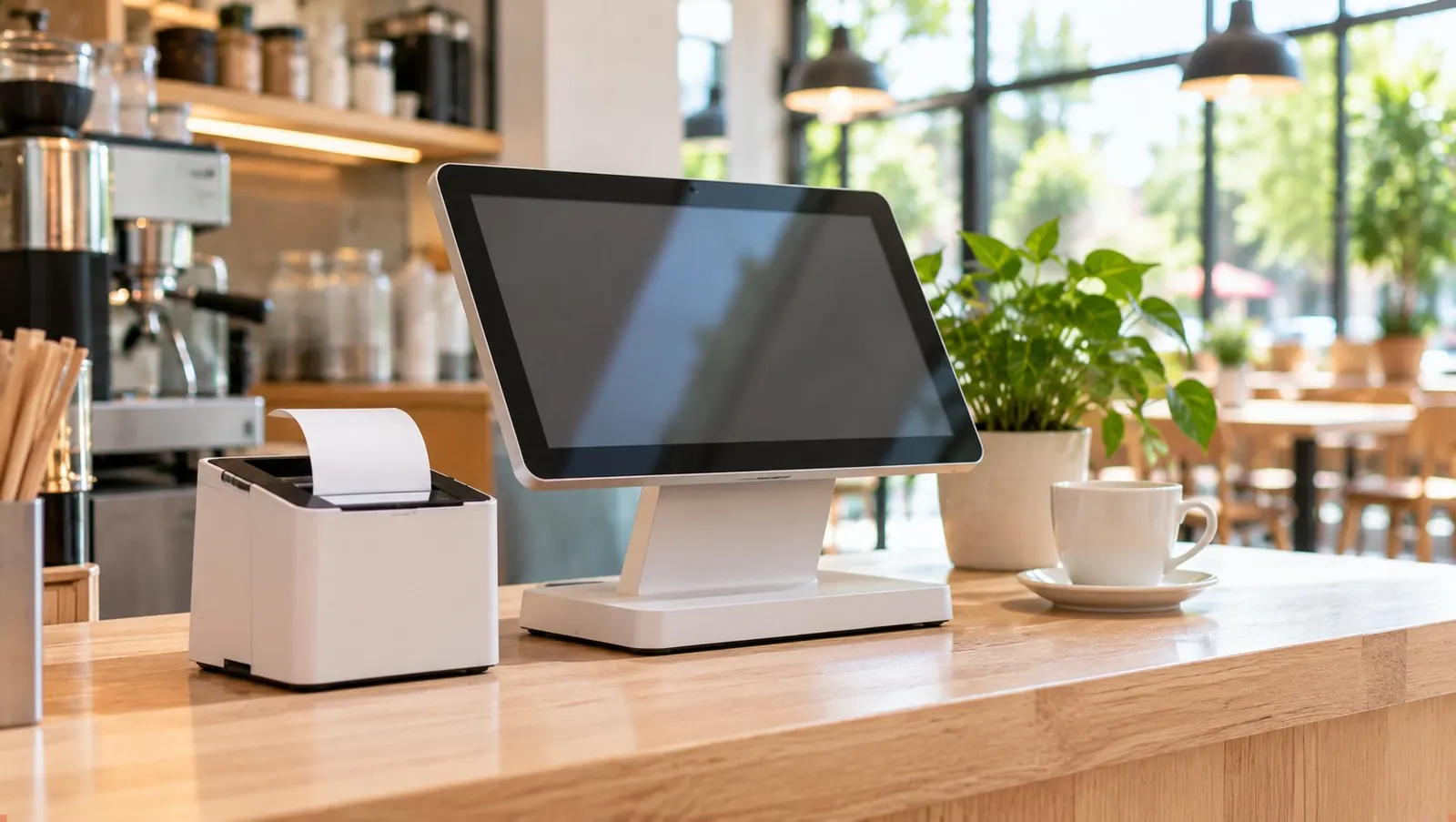 First steps≈ 6 min · Beginner What hardware you need for the POS (requirements and kits) Minimum requirements and compatible devices for Cofactu's point of sale (TPV): browsers, thermal printer, cash drawer, barcode scanner and recommended kits by type of business. Open the guide →